Repair or replace? How to tell which one your roof needs
This is the question almost every homeowner opens with, and it’s the one where the incentives are least aligned. A replacement is worth considerably more to a contractor than a repair. So it’s worth knowing how to read the situation yourself.
Signals that point to repair
A repair is usually the right call when the problem is localized and the rest of the roof is sound:
- A single leak with an identifiable source — a failed pipe boot, a lifted shingle, damaged flashing around a chimney or skylight
- Storm damage confined to one slope or one area
- The roof is comfortably inside its expected life, and the surrounding shingles are still flexible with their granules intact
Flashing is worth calling out specifically. A surprising share of leaks people assume are shingle failures are actually flashing failures — at chimneys, valleys, and sidewalls. Flashing can be replaced without touching the field of the roof, and it costs a fraction of a replacement.
Signals that point to replacement
Replacement starts making sense when the problem is systemic rather than local:
- Age. Most asphalt roofs are specified for 20 to 30 years. Past 20, repairs start becoming a series of payments toward an outcome you’ll reach anyway.
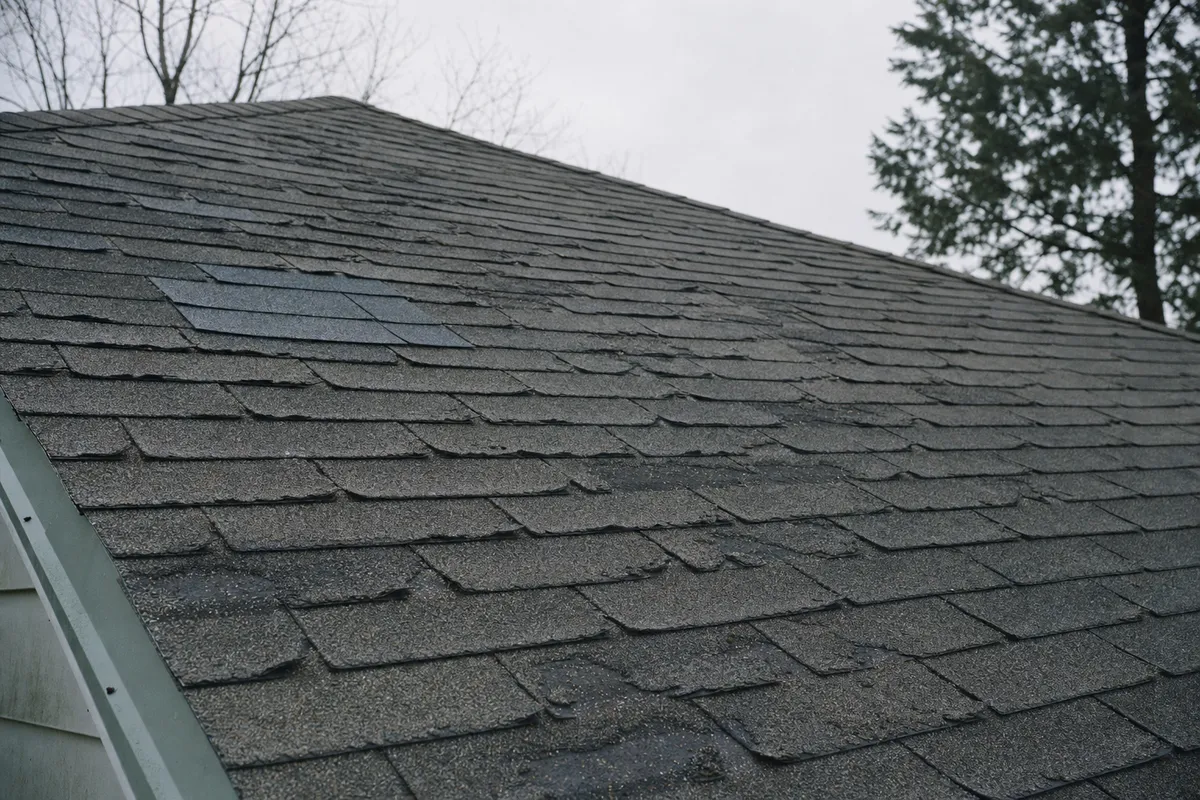
- Widespread granule loss. Check your gutters. Heavy granule accumulation means the shingle surface is breaking down across the whole roof, not in one spot.
- Multiple leaks in separate locations. One leak is an event. Three leaks in three places is a pattern, and patching each one individually is rarely the cheaper path.
- Curling, cupping, or brittleness. Shingles that curl at the edges or crack when flexed have lost their oils. That is not repairable.
- Sagging. A visible dip in the roofline suggests the decking underneath has been compromised. That’s structural and it needs opening up.
The questions worth asking
Whatever recommendation you get, these three questions will tell you a great deal about who you’re dealing with:
“Can you show me?” Photographs of the specific problem areas. Any contractor who has been on your roof should have them, and should be glad to walk you through them.
“What happens if I repair it instead?” A straight answer sounds like “you’ll likely get three to five more years, and here’s what will fail next.” A vague answer, or immediate pressure toward replacement, is informative in itself.
“What’s the condition of the decking?” If they haven’t looked, or can’t say, they haven’t inspected thoroughly enough to be recommending anything.
A note on insurance
If the damage came from a storm, the repair-versus-replace question may be partly your insurer’s to answer. Document everything before any work happens — photographs, dates, and the inspection report. Adjusters work from evidence, and evidence gathered after the fact is worth much less.
Everstead Roofing provides free inspections and written quotes with no obligation, including an honest assessment of whether you need a repair or a replacement. We also assist with insurance claims.