
What actually happens during a roof inspection
“Free roof inspection” covers a wide range of experiences — from a genuine forty-minute assessment to someone glancing up from the driveway and producing a quote. Knowing what a thorough inspection involves makes the difference obvious.
The exterior
The visible roof surface is the starting point, not the whole job:
- Shingle condition across every slope — curling, cracking, granule loss, missing pieces
- Flashing at chimneys, valleys, sidewalls, skylights, and any other penetration. This is where a large share of leaks originate.
- Pipe boots and vents. The rubber boots around plumbing vents commonly fail before the shingles do, and they’re cheap to replace before they leak.
- Ridge and hip lines for lifting or displaced caps
- Gutters and downspouts — both their condition and what’s collecting in them. Granule accumulation is diagnostic.
- Moss and debris, particularly on north-facing and shaded slopes
The attic
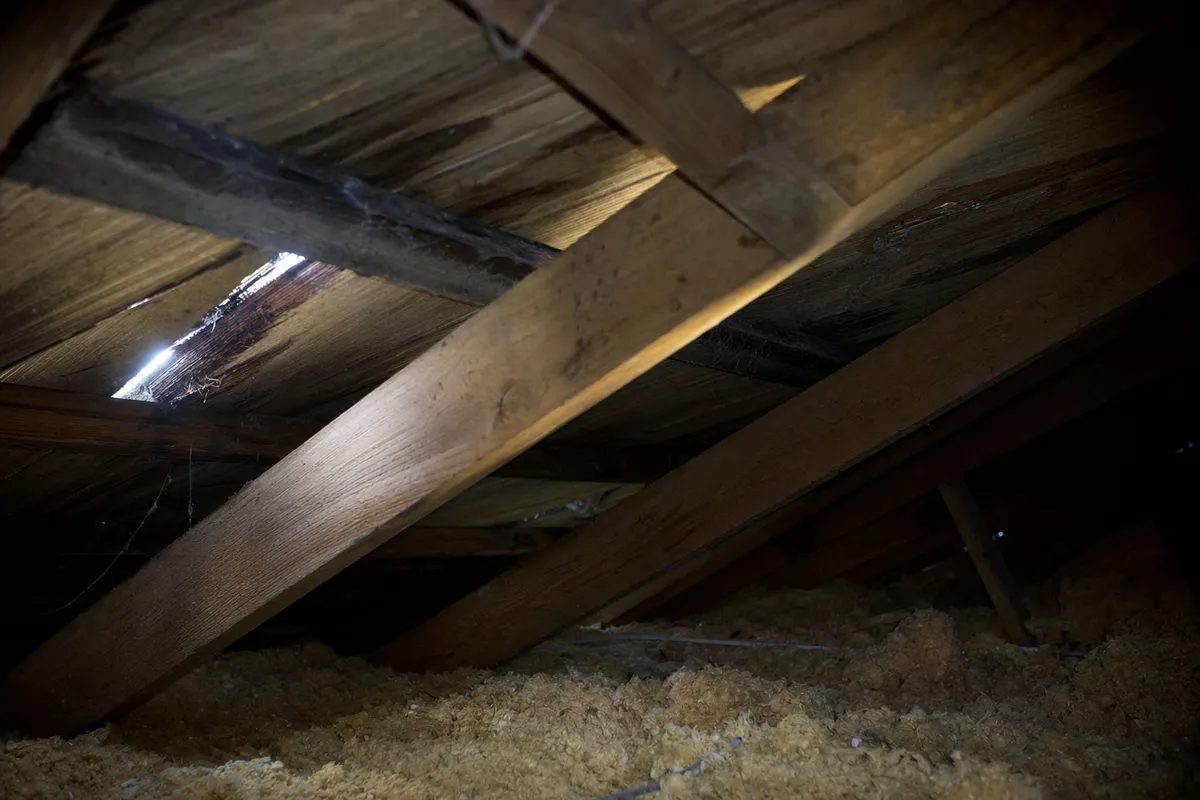
This is the step most often skipped, and it’s frequently where the real answers are. From inside the attic a good inspector is looking for:
- Daylight through the decking
- Water staining on the underside of the deck or on the rafters, which reveals leaks that haven’t yet reached your ceiling
- Mold or mildew, which points to a ventilation problem rather than a leak
- Insulation condition — compressed or damp insulation tells its own story
- Ventilation — whether intake and exhaust are actually balanced
Attic ventilation deserves particular attention in our climate. Poor airflow traps warm moist air against the underside of the deck, which rots it from the inside while the shingles above still look perfectly fine.
The written report
An inspection you can act on produces documentation. It should include:
- Photographs of every problem area, not just a summary
- The specific location of each issue
- A severity assessment — what needs attention now versus what to monitor
- An estimate of remaining roof life
- A written quote for any recommended work, itemized
If you receive a number and no documentation, you have received a sales visit rather than an inspection.
How often
For most homes, once a year is reasonable, plus an additional check after any significant windstorm. Spring and early autumn are the natural times — spring to assess what winter did, autumn to go into the wet season knowing where you stand.
If your roof is past fifteen years, moving to twice a year is worth the effort. Problems found early are almost always repairs. Problems found late are almost always replacements.
Everstead Roofing’s inspections are free and carry no obligation, and include a detailed written quote. Serving Vancouver, WA and within 60 miles.